Preparing a nursery is one of the most exciting and overwhelming tasks that comes with welcoming a new baby. Between the flood of product recommendations, Pinterest boards, and well-meaning advice from everyone you know, it can be difficult to separate the must-haves from the nice-to-haves. After helping dozens of expecting families set up their nurseries across New York, Los Angeles, and Austin, we have distilled our process into a comprehensive checklist that covers every corner of the room, and a few spaces you might not have considered.
This guide goes beyond a simple shopping list. We will walk you through the organizational systems, storage solutions, and layout strategies that will make your first weeks with baby significantly smoother. Whether you are working with a dedicated nursery suite or carving out a corner of your bedroom, these principles apply universally.
The Crib Zone: Safe Sleep Essentials
The crib is the centerpiece of any nursery, and safety here is non-negotiable. The American Academy of Pediatrics recommends a firm, flat mattress with a fitted sheet and nothing else inside the crib: no blankets, pillows, bumpers, or stuffed animals for the first year.
Here is what you need for the sleep area:
- A sturdy crib or bassinet that meets current CPSC safety standards. Check for any recall notices before purchasing secondhand
- Two to three fitted crib sheets so you always have a clean one ready when a midnight blowout happens (and it will happen)
- A waterproof mattress protector placed beneath the fitted sheet to extend the life of your mattress
- A white noise machine positioned at least three feet from the crib to create a consistent sleep environment
- Blackout curtains or shades that block at least 95% of outside light, which makes a real difference for daytime naps
- A baby monitor with both audio and video capabilities, ideally wall-mounted to keep cords safely out of reach
The best nursery is one that works beautifully at 3 AM with one hand and half-closed eyes. Every item should have a purpose and a place.
The Diaper Station: Your Command Center
You will change an estimated 8 to 12 diapers per day in those early weeks, which means your diaper station needs to function like a well-oiled machine. The goal is to have everything within arm's reach so you never need to step away from your baby on the changing pad.
Essential Supplies to Stock
- A changing pad with contoured sides secured to the top of a dresser or dedicated changing table
- Two changing pad covers plus a disposable liner for quick cleanups between washes
- Diapers organized by size in clear bins or a dedicated drawer divider system. Keep your current size front and center with the next size behind it
- A wipe warmer or wipes dispenser within arm's reach to the right or left of the changing pad, depending on your dominant hand
- Diaper cream, hand sanitizer, and a small trash can with a lid all positioned on the same side for one-handed access
We recommend using a dresser as your changing table rather than a standalone changing unit. Once your child outgrows diapers, you still have a fully functional dresser. Choose one with smooth-gliding drawers and use drawer dividers to create dedicated zones for diapers, burp cloths, ointments, and extra onesies.
Closet Setup for Tiny Clothes
Baby clothes are adorable, and they accumulate fast. The key to managing a nursery closet is creating a system that grows with your child through the first two years. Here is the framework we use with every client:
The Three-Zone Closet System
- Current size zone (eye level): Install a double-hang rod to maximize vertical space. Use slim velvet hangers or baby-specific hangers to keep outfits visible and organized by type: onesies, sleepers, outfits, and jackets.
- Next size zone (upper shelf): Store the next size up in clear, labeled bins. When your baby outgrows the current size, the transition is seamless. Simply swap bins and rehang.
- Outgrown and keepsake zone (highest shelf or separate storage): Use vacuum-sealed bags or acid-free storage boxes for items you want to save. Label everything with the size and season.
For folded items like swaddles, burp cloths, and receiving blankets, we love using shelf dividers on the closet shelf or a hanging organizer on the back of the closet door. This keeps everyday essentials visible without taking up valuable drawer space.
Storage Solutions That Actually Work
Nurseries have a unique challenge: they need to store a wide variety of items in vastly different sizes, from tiny socks to a full-sized stroller. Here are the storage strategies that consistently work best for our clients:
- Under-crib storage: Use flat, rolling bins beneath the crib for extra sheet sets, sleep sacks by season, or backup supplies. Choose bins with lids to keep everything dust-free.
- Bookshelf with baskets: A low bookshelf with woven or fabric baskets creates flexible, accessible storage for toys, books, and soft goods. Label the baskets so caregivers know exactly where everything belongs.
- Over-the-door organizers: Perfect for shoes, hats, small accessories, or even first-aid supplies. This is prime real estate that most people overlook entirely.
- Corner shelving: Floating corner shelves can display books face-out, making it easy for toddlers to eventually choose their own stories while keeping the floor clear.
Organization is not about perfection. It is about creating systems that reduce decision fatigue during the most demanding season of your life.
The Feeding Corner
Whether you are breastfeeding, bottle-feeding, or both, having a comfortable and well-stocked feeding area makes a significant difference in those long nighttime sessions. Position your nursing chair or glider near an outlet (for phone charging and a nightlight) and set up a small side table or caddy with these essentials:
- A refillable water bottle and snack container
- Burp cloths and a muslin blanket
- Nursing pads and nipple cream if breastfeeding
- A small reading light that won't wake the baby
- Your phone charger and a remote for the white noise machine
Keep a small basket beside or beneath the chair to corral these items. When visitors or your partner take over for a feed, everything they need is right there without searching through drawers.
Mom's Closet: Preparing for Postpartum
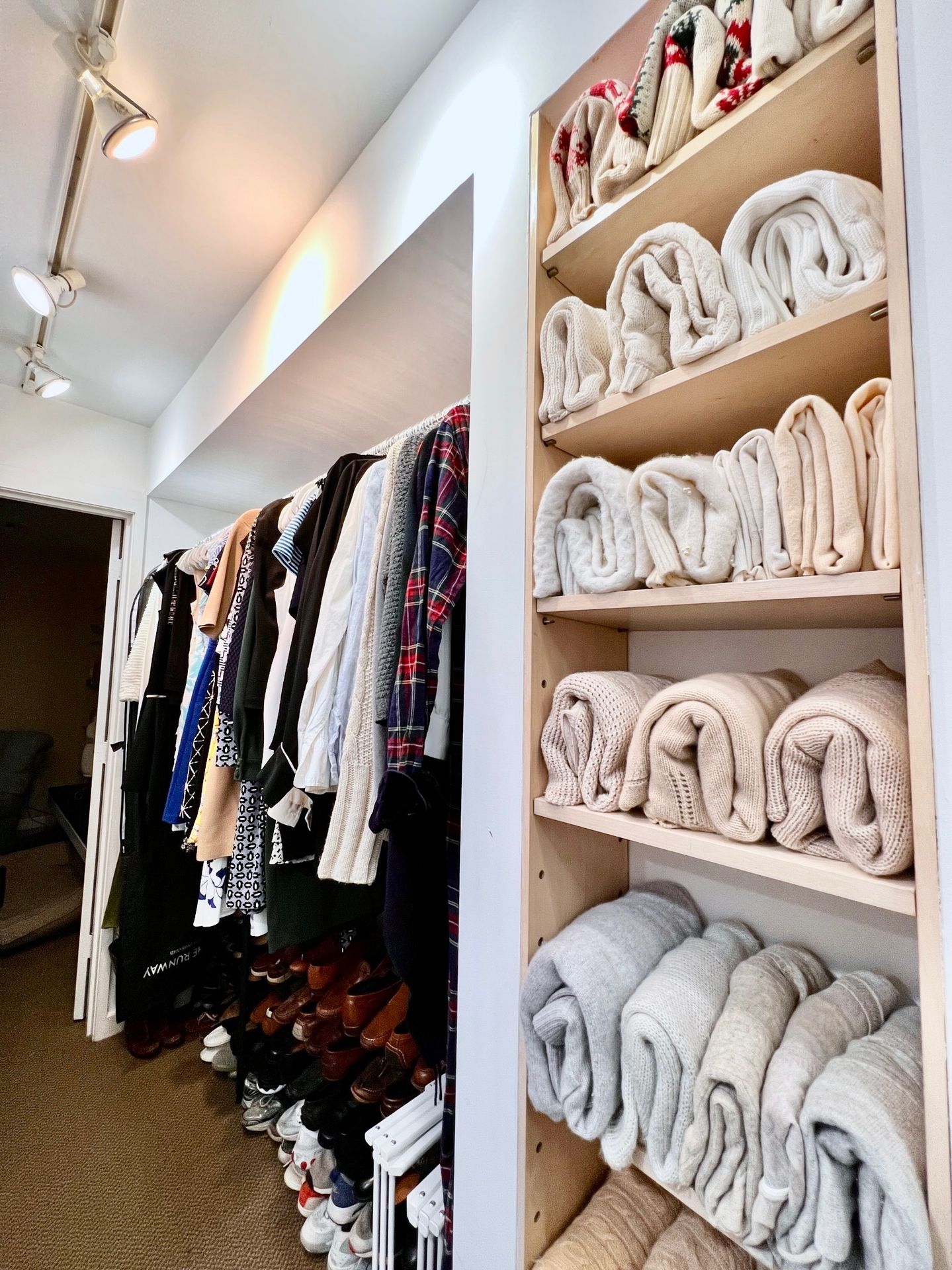
This is the step that most nursery guides skip entirely, but it is something we prioritize with every expecting client. Your wardrobe needs will shift dramatically in the weeks after delivery, and taking 30 minutes to reorganize your own closet before baby arrives can save you real frustration during recovery.
What to Do Before Your Due Date
- Move your most comfortable, easy-access clothing to the front: nursing-friendly tops, stretchy pants, robes, and zip-up layers
- Pack away anything that requires effort like structured blazers, dry-clean-only pieces, or pre-pregnancy jeans. You do not need those staring at you during recovery.
- Create a dedicated drawer or shelf for postpartum essentials: disposable underwear, nursing bras, comfortable socks, and a cozy going-home outfit
- Set out two to three "grab and go" outfits on a single hanger each, so getting dressed in the early weeks requires zero thought
This small act of preparation is genuinely one of the most meaningful things you can do for your future postpartum self. When you are sleep-deprived and adjusting to a completely new routine, opening your closet to find exactly what you need, right where you expect it, is a quiet form of self-care.
The Final Walkthrough
Once everything is set up, do a final walkthrough of the nursery with these questions in mind:
- Can you reach the crib, changing pad, and feeding chair in the dark without tripping over anything?
- Are all cords from monitors, lamps, and blinds secured and out of reach?
- Is the room temperature easy to regulate between 68 and 72 degrees?
- Does every caregiver (your partner, grandparents, a night nurse) know where to find what they need?
- Do you have a clear system for restocking diapers, wipes, and other consumables before they run out?
A well-organized nursery is not about having the most beautiful space on Instagram. It is about creating a functional environment that supports you and your baby through the sleepless nights, the feeding marathons, and the quiet moments of joy in between. Start with the essentials, build systems that make sense for your daily rhythm, and remember that the best nursery is one that works for your family, not anyone else's.
If the idea of setting all of this up feels overwhelming, that is exactly what we are here for. Our nursery preparation service handles everything from product research and sourcing to full installation and closet organization, so you can focus on the part that actually matters: getting ready to meet your baby.