There is a persistent myth in the world of home organization that beautiful spaces and young children cannot coexist. That once kids enter the picture, you must surrender your aesthetic standards, accept a permanent layer of primary-colored plastic across every surface, and wait patiently until they leave for college before reclaiming your home. At Swoon Spaces, we reject this notion entirely. We have designed and installed organization systems for hundreds of families across New York City, Los Angeles, and Austin, and we can tell you with complete confidence: a home with children can be both stunningly organized and genuinely livable.
The secret is not stricter rules or more storage bins. It is designing systems that account for how children actually move through space, what they are developmentally capable of, and how your family truly lives day to day. When organization meets your family where it is, rather than where a magazine spread imagines it should be, something remarkable happens. The systems sustain themselves. The children participate willingly. And the adults stop spending their evenings picking up the same toys for the hundredth time.
This guide distills everything we have learned from years of working with families into a comprehensive, room-by-room approach to organizing with children in mind.
The Foundation: Designing for Independence, Not Perfection
Before we discuss specific rooms or products, we need to address the single most important principle of family organization: the system must be simple enough for its youngest user to operate independently. This is where most parents go wrong. They design elaborate, Instagram-worthy systems that only an adult can maintain, then feel frustrated when the household cannot keep up.
"The most elegant organization system is one that works without you in the room. If your children can put things away without asking where something goes, you have achieved something far more valuable than aesthetic perfection. You have achieved freedom."
For toddlers, this means open bins at ground level with picture labels. For school-age children, it means clearly defined zones with simple categorization. For teenagers, it means flexible systems that respect their growing autonomy while maintaining household standards. The goal across every age is the same: remove friction from the act of putting things away, so that tidying becomes an effortless habit rather than a dreaded chore.
The Entryway: First Impressions and Daily Routines
The entryway is where organization either begins or falls apart. Every family has experienced the after-school avalanche: backpacks dropped on the floor, shoes kicked into corners, jackets draped over the nearest chair, permission slips crumpled in pockets. If you do not have a system that intercepts this chaos the moment your family walks through the door, it will spread through every room in your home.
What Works
Install a dedicated drop zone for each family member. This does not need to be an elaborate mudroom. Even a narrow hallway can accommodate the essentials:
- Low hooks at child height for jackets and backpacks. Children are far more likely to hang something on a hook they can reach than to open a closet, find a hanger, and hang it properly. Meet them where they are.
- Individual cubbies or baskets labeled with each child's name. Everything that belongs to them goes here: hats, gloves, sunglasses, library books, sports equipment bags.
- A shoe tray or low shelf directly inside the door. The rule is simple: shoes come off and go on the tray. No exceptions, no negotiation.
- A small tray or wall-mounted pocket for papers that need adult attention: permission slips, school notices, party invitations. This prevents the kitchen-counter paper pile that haunts so many families.
The key is making the correct behavior the easiest behavior. When a hook is right there at the perfect height, hanging up a jacket requires less effort than dropping it on the floor. That is the design principle that separates systems that last from systems that fail within a week.
The Kitchen and Pantry: Empowering Little Helpers
Kitchens in family homes serve double or triple duty. They are where meals are prepared, homework is completed, snacks are negotiated, and family conversations unfold. A well-organized family kitchen does not just store food efficiently. It empowers children to participate in meal preparation, serve themselves healthy snacks, and clean up after themselves.
Snack Stations That Reduce Decision Fatigue
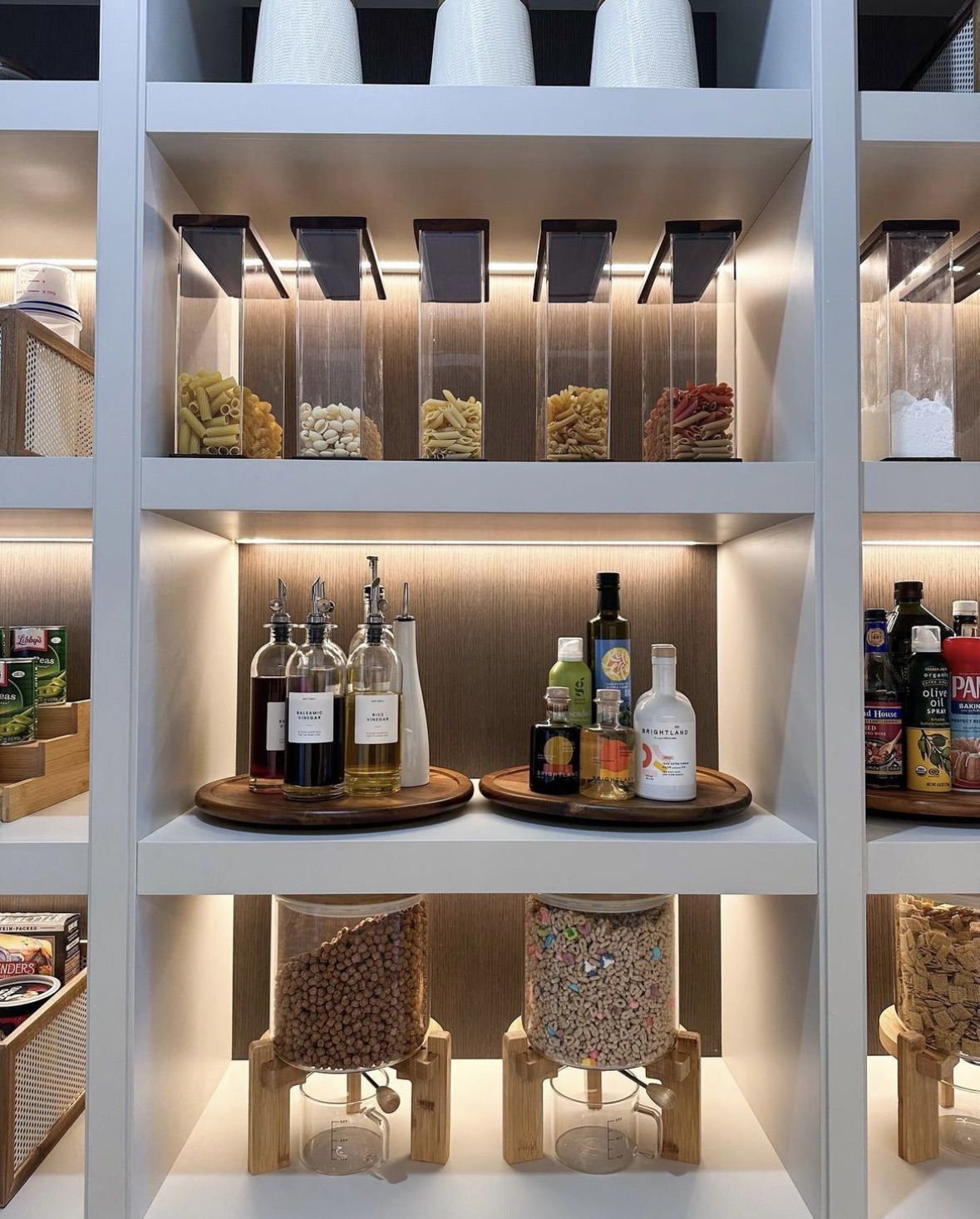
One of the most transformative changes we make in family kitchens is creating a dedicated, child-accessible snack zone. This is typically a lower drawer or a specific pantry shelf stocked with pre-approved snacks in appropriate portions.
- Use clear, lightweight containers that small hands can open and close without help. Avoid glass for younger children and choose BPA-free containers with simple flip-top or pop-off lids.
- Stock the zone with pre-portioned options. Small bags of crackers, individual fruit cups, cheese sticks, and portioned nuts eliminate the need for children to ask for help and reduce food waste from opened-and-abandoned packages.
- Rotate the selection weekly to maintain interest without overwhelming choices. Five to seven options at any given time is the sweet spot.
"When children can independently access healthy snacks without opening every cabinet in the kitchen, the entire energy of the household shifts. Parents stop being gatekeepers. Children develop autonomy and confidence. It is a small change with outsized impact."
Lower-Cabinet Zones for Kids
Redesign at least one lower cabinet as the children's zone. Stock it with their plates, cups, bowls, and utensils. When a child can set their own place at the table or get themselves a cup of water without climbing on a counter, you have removed a hundred small interruptions from your day and given them a genuine sense of capability.
The Playroom: Containing the Creative Chaos
If the entryway is where daily organization begins, the playroom is where it faces its greatest test. Toys multiply in ways that defy physics. Birthday parties, holidays, grandparent visits, and impulse purchases create an ever-expanding collection that no playroom can sustainably absorb without a thoughtful system.
The Rotation Method
We are strong advocates of toy rotation for families with children under ten. The concept is simple: only a curated selection of toys is available at any given time. The rest are stored out of sight in labeled bins in a closet, basement, or storage area. Every two to four weeks, you rotate the selection.
The benefits are profound:
- Reduced overwhelm. Children with fewer choices play more deeply and creatively. Research consistently shows that too many options lead to shorter attention spans and less satisfying play.
- Easier cleanup. Fewer toys out means fewer toys to put away. A five-year-old can realistically tidy a room with twenty toys. A room with two hundred is a different proposition entirely.
- Renewed excitement. Toys that have been out of sight for a month feel brand new when they reappear. This extends the life and value of every toy you own.
- Simplified purchasing decisions. When you see how happily your child plays with a thoughtfully curated selection, the pressure to constantly buy new toys diminishes naturally.
Storage That Invites Participation
The playroom storage system itself must be designed for independence. This means:
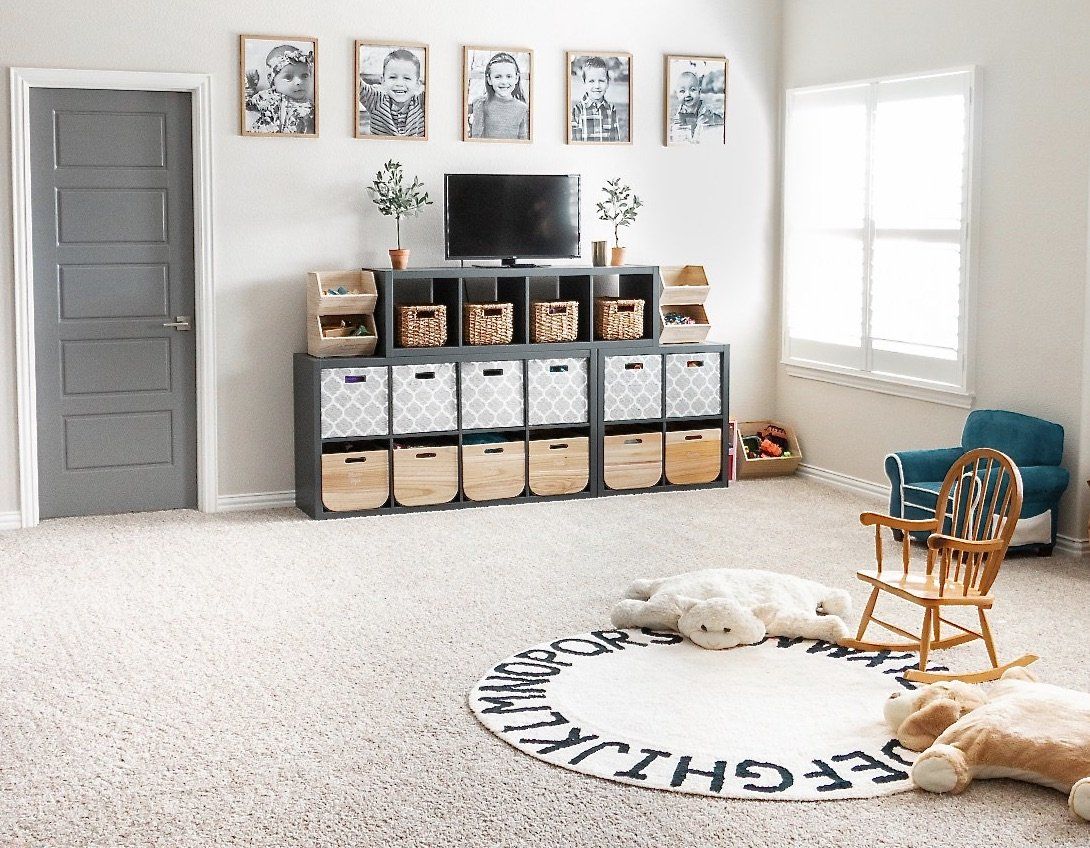
- Open shelving at child height with bins that slide in and out easily. Avoid lids for everyday toy bins. The added step of removing a lid is enough friction to derail a toddler's cleanup effort.
- Picture labels on every bin for pre-readers. A photograph or simple illustration of the category (blocks, cars, dolls, art supplies) makes it immediately clear where each item belongs.
- A "one bin out" rule. Only one category of toy comes off the shelf at a time. When your child wants to switch activities, the first bin goes back before the next one comes out. This single rule transforms playroom maintenance.
- Art supplies in a self-contained caddy that can travel to the kitchen table and back. Keeping crayons, markers, paper, and stickers in a portable container prevents art materials from colonizing every room in the house.
Bedrooms and Closets: Age-Appropriate Autonomy
A child's bedroom should evolve with them. The closet system that works for a three-year-old will not serve a ten-year-old, and the setup for a preteen will frustrate a teenager. Building in flexibility from the beginning saves you from expensive overhauls every few years.
For Young Children (Ages 2 to 6)
Install a lower closet rod that your child can reach. This is one of the highest-impact, lowest-cost changes you can make. When a child can hang up their own jacket or select their own outfit from a curated selection, you have eliminated a daily point of friction and given them genuine ownership of their morning routine.
Keep the upper rod for out-of-season clothing, formal wear, or next-size-up items stored in labeled bins. Use the floor of the closet for a small shoe rack and a laundry basket that is easy to toss clothes into.
For School-Age Children (Ages 7 to 12)
This is the age to introduce more sophisticated systems. Drawer dividers for socks and underwear, shelf organizers for folded items, and a designated spot for school uniforms or the next day's outfit all support growing independence. Consider a weekly outfit planning system where your child selects and lays out five outfits on Sunday evening, dramatically reducing morning decision-making stress.
For Teenagers
Respect their autonomy while maintaining non-negotiable household standards. Agree on shared expectations (laundry goes in the hamper, clean clothes get put away within 24 hours, the floor is visible at all times) and then give them freedom within those boundaries to organize their space as they see fit. Providing quality organizational tools, such as attractive drawer dividers, a good hamper, and adequate hangers, removes excuses and makes the right behavior easier than the wrong one.
The Bathroom: Streamlining the Morning Rush
Family bathrooms are high-traffic zones where minutes matter, especially on school mornings. An organized family bathroom anticipates the rush and eliminates bottlenecks.
- Assign each child a color. Their towel, toothbrush, cup, and washcloth are all the same color. No more arguments about whose towel is whose, and visual identification is instant.
- Use a step stool that stores flat against the wall or under the vanity. Permanent step stools create tripping hazards. Foldable options give children access to the sink when they need it and disappear when they do not.
- Install a low hook on the back of the door for each child's bathrobe or towel. As with entryway hooks, accessibility is everything.
- Keep bath toys in a mesh bag that hangs from the showerhead or a suction hook. This allows them to drip-dry between uses and keeps the tub floor clear.
"Color-coding is one of the simplest and most effective organizational strategies for families. It transcends age and literacy. A two-year-old knows their color. A twelve-year-old respects it. And parents never have to referee a towel dispute again."
Living Areas: Shared Spaces That Honor Everyone
The living room is often the most contested space in a family home. Adults want it to feel serene and sophisticated. Children want it to be a play space. The solution is not choosing one over the other. It is designing a space that elegantly transitions between both purposes.
Invest in furniture that doubles as storage: ottomans with hidden compartments, console tables with baskets below, built-in window seats with lift-up lids. These pieces allow toys, games, and craft supplies to be present in the living room without being visible when the space needs to feel like an adult retreat.
Establish a simple end-of-day reset ritual. Every evening, ideally at the same time, the family spends ten minutes together returning the shared spaces to their baseline state. This is not punishment or a chore. It is a household rhythm, as natural as brushing teeth before bed. When framed positively and practiced consistently, children internalize it remarkably quickly, and it becomes the anchor that keeps your entire home in order.
The Mindset Shift: Progress Over Perfection
If there is one thing we want every parent to take away from this guide, it is this: the goal of family organization is not a home that looks untouched. It is a home that can be restored to order in under fifteen minutes. That is the standard we design to at Swoon Spaces, and it is the standard that actually works for families with children.
Perfection is fragile. A perfectly organized playroom lasts until the first child walks in. But a well-designed system, one built for resilience, simplicity, and the realities of family life, can absorb the daily chaos and bounce back effortlessly. That resilience is the true luxury. It means you spend your weekends at the park instead of reorganizing the basement. It means you can welcome unexpected guests without a frantic tidying sprint. It means your home works for you, rather than the other way around.
Children grow. Their needs change. Their toys evolve into sports equipment, which evolves into textbooks, which evolves into who knows what. The organizational systems in your home should be designed to evolve alongside them. If your current approach is not working, or if you are ready to build systems that genuinely accommodate every member of your family, we would love to help. At Swoon Spaces, we specialize in creating beautiful, functional homes where families thrive, not just survive.