When Robin Arzon reaches out to you about organizing her home, you clear your calendar. As a Peloton VP, bestselling author, ultramarathon runner, and one of the most recognizable voices in modern fitness, Robin operates at a pace that most of us can barely comprehend. Her days are structured down to the minute, her energy is electric, and her standards are uncompromising. So when she told us that the one place she felt friction was in how her home was organized, we knew this project would demand everything we had and then some.
Working with high-profile clients is something we do regularly at Swoon Spaces. But every celebrity project carries its own energy, its own set of expectations, and its own definition of what "organized" truly means. For Robin, organization was not about minimalism or aesthetic perfection for its own sake. It was about performance. She wanted her home to function with the same discipline and intentionality that she brings to every Peloton ride, every keynote speech, and every chapter of her books.
This is the story of how we transformed Robin Arzon's New York City residence into a space that matches the extraordinary life she leads.
Understanding a Celebrity's Relationship With Their Home
Before we moved a single item, we spent time understanding how Robin actually lives. This is the step that separates true luxury organization from surface-level tidying, and it matters even more when working with a celebrity whose schedule is intensely demanding. Robin is a mother, a business leader, a creative, and an athlete. Each of those roles places distinct demands on her home environment, and our job was to build systems that honored all of them simultaneously.
During our initial walkthrough, Robin described her mornings as a series of rapid transitions. She wakes up early, often before dawn, for training sessions. She transitions from workout gear into meeting-ready looks in a matter of minutes. Between media appearances, brand partnerships, and Peloton commitments, there is no margin for standing in a closet wondering where something went.
"Robin told us something that stayed with me throughout the entire project: 'I don't have time to look for things. My home should know what I need before I do.' That became our guiding principle for every room we touched."
That single statement, that the home should anticipate its owner's needs, became the philosophical foundation of the entire project. We were not just organizing a celebrity's home. We were building an operating system for one of the busiest women in the country.
The Closet: Where Performance Meets Luxury
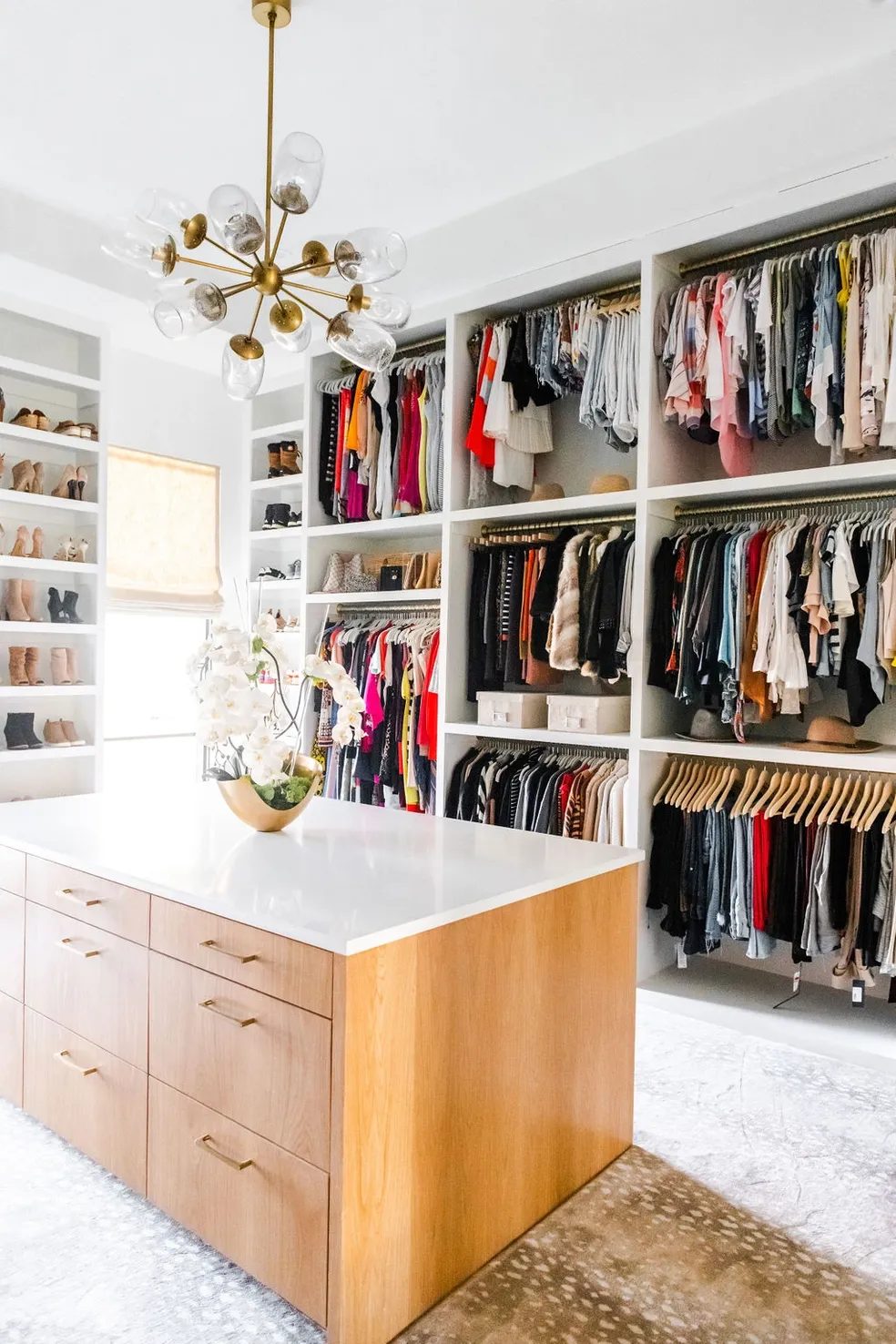
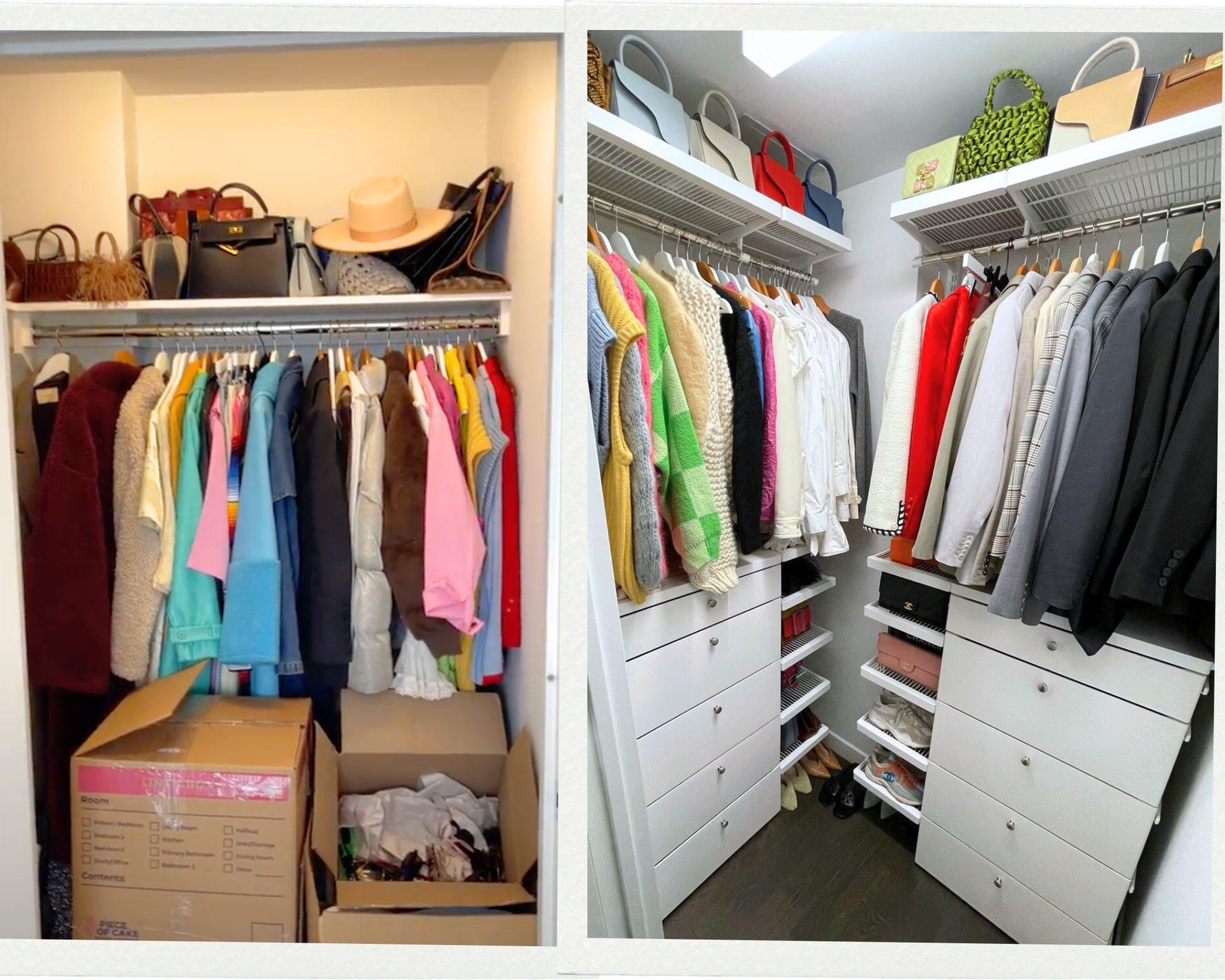
Robin's closet was, understandably, the most complex space in the project. As someone who moves between athletic wear, corporate attire, red-carpet fashion, and casual weekend pieces on a daily basis, her wardrobe is extensive, varied, and deeply personal. Every item serves a purpose. The challenge was making every piece instantly accessible without sacrificing the visual beauty that a space of this caliber deserves.
We began by categorizing her wardrobe into four distinct lifestyle zones:
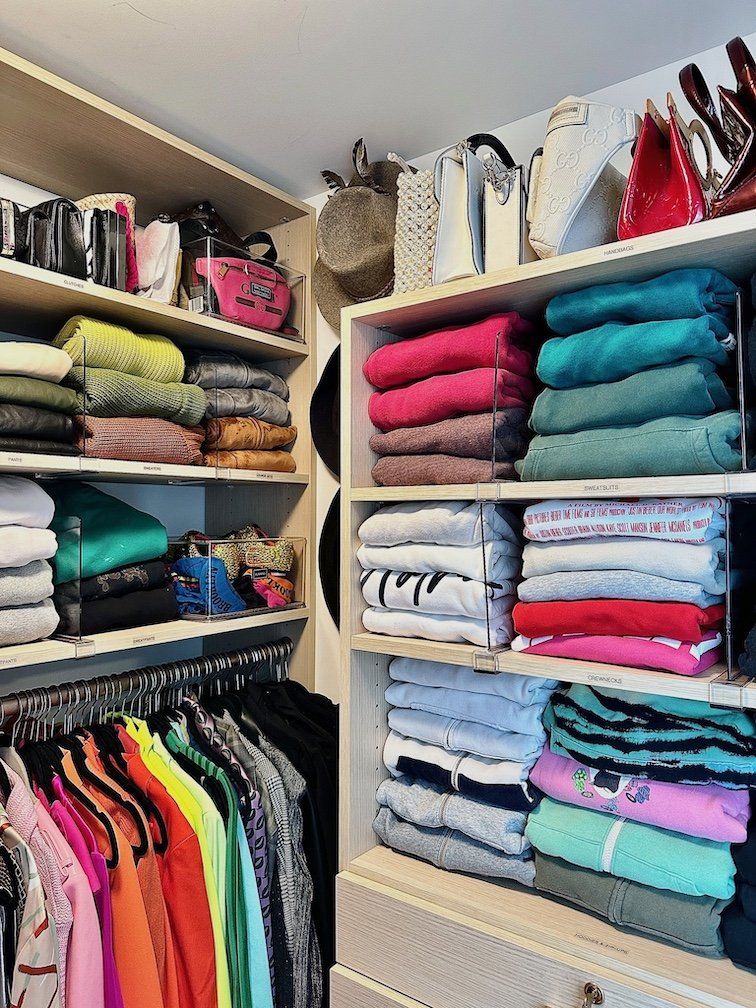
- Performance zone: Athletic wear, training shoes, and cycling gear organized by activity type and rotation schedule. Items she reaches for before dawn needed to be accessible without full lighting, so we used tactile dividers and a consistent shelf placement system she could navigate almost by feel.
- Professional zone: Tailored pieces, blazers, and media-ready looks arranged by color gradient and seasonal weight. Pull-out valet rods were installed for next-day outfit planning, a detail Robin told us saved her ten minutes every morning.
- Event zone: Red-carpet gowns, statement pieces, and designer collaborations housed in breathable garment bags within a glass-front display section. These pieces are worn less frequently but carry enormous sentimental and financial value, so proper preservation was essential.
- Everyday zone: Casual wear, denim, and weekend staples positioned at eye level along the most accessible wall, making those quick Saturday morning decisions effortless.
We selected slim velvet hangers in a consistent matte black throughout the closet to create visual uniformity. Shoe displays were organized by category: training sneakers separated from heels, boots arranged by shaft height, and a dedicated display shelf for her most iconic pairs. Overhead, soft LED strip lighting with a 3200K color temperature ensured that every color read true, whether Robin was getting dressed at five in the morning or evaluating an outfit for an evening event.
The Kitchen: Fueling a High-Performance Life
Robin Arzon's relationship with nutrition is as disciplined as her relationship with fitness. Her kitchen needed to support meal preparation at scale, whether that meant her own performance-focused meals, quick snacks during packed workdays, or preparing food for her family. When we walked in, the kitchen was not disorganized in the traditional sense. It simply was not optimized for the speed and specificity that Robin's lifestyle demands.
Our approach started with the pantry. We implemented a zone-based system that grouped items by purpose rather than type. Pre-workout fuel in one section. Post-workout recovery in another. Everyday cooking essentials in a third. Snacks and quick-access items at eye level, with specialty ingredients and bulk supplies on higher shelves. Every container was clear, every label was clean and consistent, and every shelf was measured to eliminate wasted vertical space.
The refrigerator received the same treatment. We introduced a rotation system inspired by professional kitchens, with designated zones for meal-prepped items, fresh produce, beverages, and grab-and-go snacks. Robin mentioned that she often has a window of just a few minutes between meetings to refuel, so we made sure her highest-frequency items were always within immediate reach, no searching required.
Drawers were outfitted with custom bamboo dividers for utensils, and we consolidated her collection of water bottles, shakers, and travel mugs into a single pull-out cabinet with adjustable compartments. It is a small detail, but when you are someone who relies on these items every single day, the difference between a tangled drawer and an organized one is the difference between a smooth morning and a frustrating one.
The Home Office and Creative Space
What many people do not realize about Robin Arzon is how much of her work happens at home. She writes books. She develops content. She strategizes brand partnerships and reviews business proposals. Her home office needed to function as a legitimate workspace, not a repurposed corner with a laptop and a stack of papers.
We designed an organizational system that separated her creative work from her business operations. On one side of the office, a dedicated bookshelf held her published works, reference materials, and inspirational reads, arranged with intention rather than haphazardly stacked. On the opposite wall, a filing system with labeled folders kept contracts, brand materials, and project timelines within arm's reach.
Her desk was decluttered completely. We introduced a daily-use tray for items she reaches for constantly, a pen holder, a notepad, her phone stand, and a single framed photo. Everything else was tucked into labeled drawers below. The goal was a workspace that felt open and energizing rather than cluttered and heavy. For someone who draws creative energy from her environment, this shift was significant.
"The best organization does not just reduce clutter. It removes mental friction. When Robin sat at her desk after the transformation and said, 'I can actually think in here now,' we knew we had done our job."
The Nursery and Family Spaces
Organizing for a celebrity is one thing. Organizing for a celebrity who is also a devoted mother adds a beautiful layer of complexity to the work. Robin's daughter's spaces needed to be just as intentional as the rest of the home, but with warmth, playfulness, and a system that both parents and caregivers could maintain effortlessly.
In the nursery, we established a rotation system for toys that keeps the space from becoming overwhelming. Rather than having everything out at once, a curated selection is accessible at any given time, with seasonal and developmental rotations stored neatly in labeled bins in a nearby closet. Clothing was organized by size and season, with outgrown pieces immediately sorted into donation or keepsake bins, eliminating the slow creep of clutter that so many young families experience.
Diaper stations, feeding supplies, and bedtime essentials were each given their own dedicated zone, making those middle-of-the-night moments as smooth as possible. We chose soft-close drawers and quiet storage solutions throughout, because when you have finally gotten a child to sleep, the last thing you need is a slamming cabinet.
The Details That Elevate a Celebrity Home
What separates a good organization project from an extraordinary one is the attention to details that most people never think about. In Robin's home, those details included:
- A luggage staging area near the entryway with a pre-packed essentials kit, because Robin travels constantly for speaking engagements, brand events, and Peloton productions. Packing for a two-day trip now takes her fifteen minutes instead of an hour.
- A content creation corner with organized lighting equipment, tripods, and ring lights stored in a pull-out cabinet, ready to deploy for Instagram Lives and video recordings without turning the living room into a production studio.
- An awards and memorabilia display that honors her achievements, from marathon medals to bestseller accolades, without making the home feel like a museum. We integrated these personal treasures into the existing design so they added warmth and story rather than visual noise.
- A wellness station near the master bathroom with recovery tools, supplements, and self-care essentials organized in tiered acrylic trays, making her post-workout routine as seamless as the workout itself.
Why Celebrity Organization Requires a Different Approach
Working with public figures like Robin Arzon has reinforced something we believe deeply at Swoon Spaces: organization is not a one-size-fits-all discipline. The systems that work for a family in the suburbs may not serve a celebrity who splits time between New York and Los Angeles. The storage solutions perfect for a minimalist would be entirely wrong for someone whose wardrobe is part of their professional identity.
Celebrity clients require heightened discretion, accelerated timelines, and an understanding that their homes serve multiple functions simultaneously: personal sanctuary, workspace, content backdrop, and family hub. Our process for these projects involves more extensive discovery, more customized solutions, and a level of follow-up support that ensures the systems we build continue working long after we leave.
Robin Arzon's project was a masterclass in this approach. Every decision we made was filtered through the lens of her unique life, her specific routines, and her personal definition of what home should feel like. The result was not just an organized space. It was a home that actively supports the extraordinary demands placed on it every single day.
The Transformation, Reflected
Weeks after the project was complete, Robin sent us a message that encapsulated everything we strive for at Swoon Spaces. She said that for the first time, her home felt like it was working with her rather than against her. The morning scramble had been replaced by a calm, efficient flow. The visual clutter that had been quietly draining her energy was gone. In its place was a sense of order that felt natural rather than rigid, beautiful rather than sterile.
That is the standard we hold ourselves to with every project, whether we are working with a globally recognized athlete or a family embarking on their first home organization journey. The details change. The commitment to transforming how you experience your home does not.
If you are ready to experience the kind of transformation that Robin Arzon trusted us to deliver, we would love to hear from you. Every great space begins with a conversation.