We talk about self-care constantly. We pour it into face serums and weighted blankets and Sunday morning rituals. We book the massage, light the candle, draw the bath. And yet, there is one of the most transformative acts of self-care that most of us overlook entirely, one that does not cost a monthly subscription and whose effects ripple through every single hour of your day: the intentional organization of the spaces where you live.
At Swoon Spaces, we have spent years inside the most beautiful homes in New York City, Los Angeles, and Austin, and we can tell you with certainty that the connection between an ordered environment and genuine well-being is not decorative philosophy. It is something our clients feel in their bodies the moment they walk through their front door after a transformation. Shoulders drop. Breathing deepens. The constant low-grade hum of visual chaos finally goes quiet. That is not tidying. That is healing.
The Science Behind Why Clutter Drains You
Before we explore how organizing functions as self-care, it helps to understand why disorganization takes such a measurable toll on your mental and physical health. The research is striking, and it validates what most of us already sense intuitively.
A landmark study from UCLA's Center on Everyday Lives and Families found that women who described their homes as cluttered or full of unfinished projects had significantly elevated cortisol levels throughout the day compared to those who described their spaces as restful and restorative. Cortisol, the body's primary stress hormone, affects everything from sleep quality and immune function to mood regulation and weight management. In other words, the pile of unsorted mail on your console table is not merely an eyesore. It is a physiological stressor that your nervous system is responding to whether you consciously notice it or not.
Princeton University's Neuroscience Institute published findings demonstrating that physical clutter in your environment competes for your attention, resulting in decreased performance and increased cognitive fatigue. Your brain is constantly processing visual stimuli, and when your surroundings are chaotic, your mind has to work harder to filter out the irrelevant noise just to focus on the task at hand. This is why so many of our clients describe a profound sense of mental clarity after their homes have been organized. They are not imagining it. Their brains are literally processing less unnecessary information.
"An organized home is not about control or perfection. It is about creating a physical environment that actively supports your emotional well-being, the same way a nutritious meal supports your body or a good night's sleep restores your mind."
Redefining What Self-Care Actually Means
Somewhere along the way, our collective understanding of self-care became synonymous with indulgence. A sheet mask. A spa day. An impulse purchase justified as "treating yourself." And while there is absolutely nothing wrong with any of those things, true self-care is far more expansive and far more structural than a single pampering moment. True self-care is about designing the conditions that allow you to thrive, not just recover.
When we organize a client's home, we are not simply rearranging their belongings. We are redesigning the infrastructure of their daily life. We are creating morning routines that flow effortlessly because everything has a place. We are building closet systems that eliminate the twenty minutes of frustrated searching that used to start every day on the wrong note. We are transforming kitchens where meal preparation becomes meditative rather than stressful because every tool and ingredient is exactly where it should be.
This is self-care at its most foundational: removing the friction, frustration, and invisible labor from the spaces where you spend the most intimate hours of your life. It is the kind of care that does not wear off after an hour. It stays with you every time you open a drawer, walk into your closet, or sit down at your desk.
The Emotional Weight of Our Belongings
One of the most profound discoveries our clients make during the organizing process is how much emotional energy their possessions have been consuming without their awareness. Every item in your home carries a story, an expectation, or an obligation. The clothes that no longer fit but symbolize a body you used to have. The kitchen gadget that represents the homemade pasta you always meant to make. The boxes of inherited china that carry the weight of family duty even though you have never once set the table with them.
Living surrounded by these unresolved objects is like carrying a backpack you forgot you were wearing. You adjust to the weight over time, but your body still bears the burden. The act of thoughtfully sorting through your belongings, making conscious decisions about what genuinely deserves space in your current life, is one of the most emotionally liberating experiences we witness as organizers. Client after client has described it as feeling physically lighter, as though they set down something heavy they did not realize they were holding.
Five Ways Organizing Nurtures Your Well-Being
The benefits of an organized home extend far beyond aesthetics. Here are the five most significant ways that intentional organization functions as genuine self-care.
1. It Restores Your Sense of Control
In a world where so much feels uncertain and beyond our influence, your home is one of the few domains where you have complete agency. When external pressures mount, whether from work, family obligations, health concerns, or the relentless pace of modern life, a well-organized home becomes an anchor. It is tangible proof that you can create order, that you can shape your environment to serve you, that calm is something you are capable of building rather than something that merely happens to you on a good day.
We see this most vividly with clients going through major life transitions: a divorce, a new baby, a cross-country relocation. In these moments of upheaval, organizing their space is not a trivial domestic task. It is a deeply grounding act that helps them reclaim a sense of stability when everything else feels in flux.
2. It Dramatically Improves Your Sleep
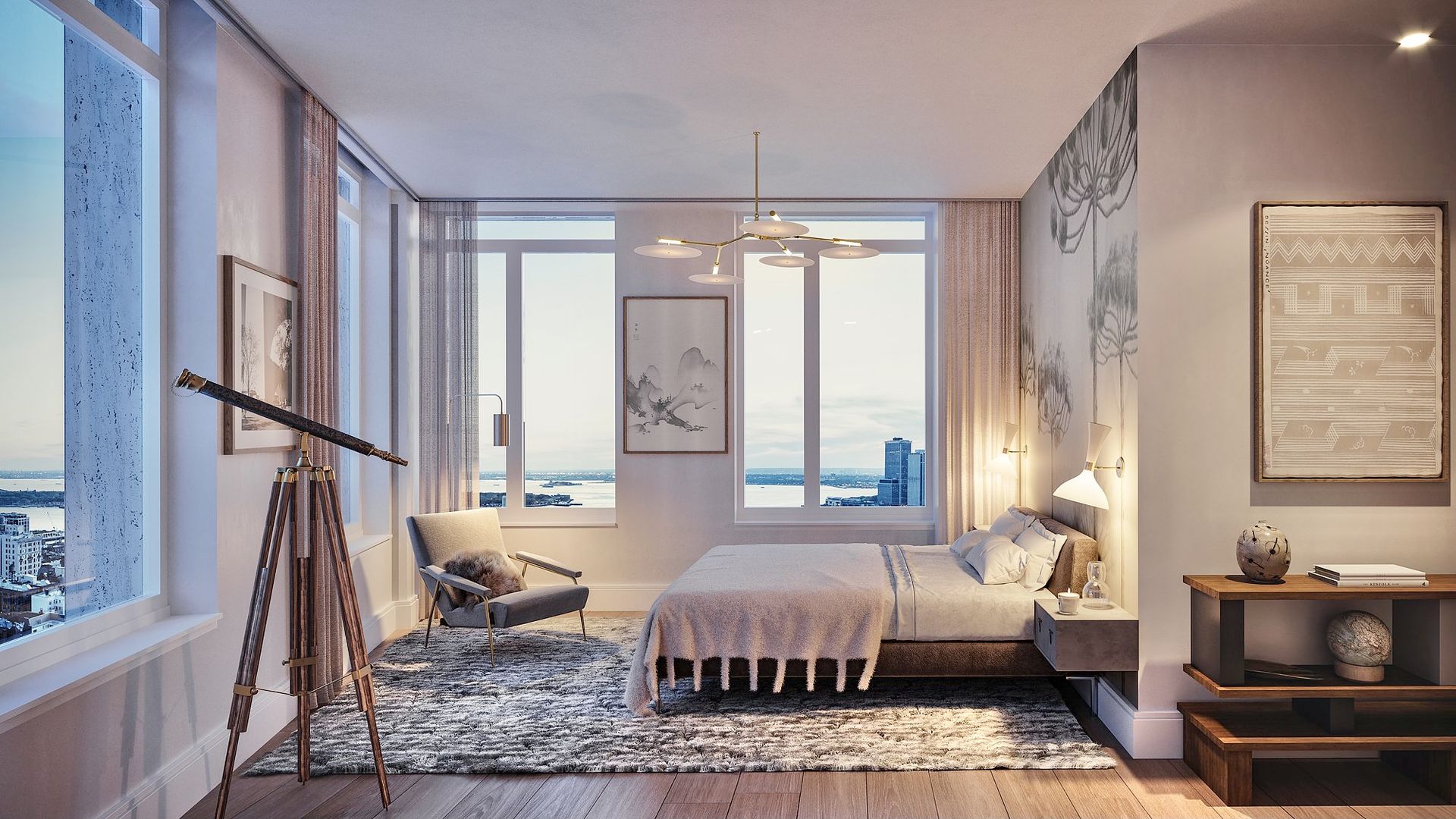
The National Sleep Foundation has documented that people who make their beds every morning are significantly more likely to report getting a good night's sleep. But it goes beyond the bed. A bedroom free of visual clutter, with a clear nightstand, organized closet, and peaceful atmosphere, sends a powerful signal to your nervous system that it is safe to power down. When the last thing you see before closing your eyes is a serene, ordered space rather than a pile of laundry and a tower of unread books, your brain transitions into rest mode more readily.
For our clients with insomnia or sleep difficulties, the bedroom is always where we start. The transformation in their sleep quality often exceeds what they achieved through supplements, apps, or even medication, simply because we removed the environmental triggers that were keeping their minds in a state of low-level alertness.
3. It Reduces Daily Decision Fatigue
Research suggests that the average adult makes approximately 35,000 decisions per day. By the time evening arrives, your decision-making capacity is genuinely depleted. Every unnecessary choice you can eliminate from your daily routine preserves that cognitive energy for the decisions that actually matter.
A thoughtfully organized home eliminates hundreds of micro-decisions: where did I put my keys, which drawer has the tape, do I have clean clothes for tomorrow, where is the permission slip my child needs signed. When every item has a designated home and every system is intuitive, these questions simply stop arising. The mental bandwidth you recover is remarkable, and our clients consistently report feeling sharper, more creative, and less irritable once the organizational noise has been cleared.
4. It Creates Space for Joy and Presence
Here is a truth that often surprises our clients: organizing is not really about getting rid of things. It is about making space. Space on your countertops, yes, but more importantly, space in your mind and in your day. When your home runs smoothly, when you are not constantly searching, sorting, shuffling, and apologizing for the mess, you reclaim time and mental presence for the things that actually bring you joy.
We have watched clients rediscover hobbies they had abandoned because they could never find their supplies. We have seen families start cooking together again because the kitchen finally felt inviting rather than overwhelming. We have had clients tell us they started reading at night again, meditating in the morning, or simply sitting in their living room and enjoying the beauty of their own home, things they had not done in years because the clutter made every room feel like a to-do list rather than a sanctuary.
5. It Is an Act of Self-Respect
Perhaps the most powerful dimension of organizing as self-care is what it communicates to yourself about your own worth. Choosing to invest in the beauty and functionality of your home is a declaration that you deserve to live in a space that supports and uplifts you. It is a rejection of the idea that chaos is just something you have to tolerate, that your environment does not really matter, that taking care of your surroundings is somehow superficial or vain.
There is nothing superficial about wanting to feel at peace in your own home. There is nothing indulgent about surrounding yourself with beauty, order, and calm. The spaces we inhabit shape us in ways both obvious and invisible, and choosing to make those spaces intentional and nurturing is one of the most profound forms of self-respect available to us.
"The way you keep your home is a reflection of how you care for yourself. When you invest in creating a space that feels calm, beautiful, and functional, you are telling yourself that your daily experience matters."
How to Start Treating Organization as Self-Care
If you are reading this and feeling inspired but unsure where to begin, here is our advice: start with the space that affects your mood the most. For many people, that is the bedroom. For others, it is the kitchen, the entryway, or the bathroom vanity. Choose the single space where disorder causes you the most daily frustration or stress, and commit to transforming just that one area.
Approach it not as a chore on your to-do list, but as a wellness practice. Put on music that makes you feel calm and inspired. Light a candle. Pour something beautiful to drink. Give yourself permission to move slowly and thoughtfully. Touch every item and ask yourself honestly whether it serves the life you are living right now, not the life you lived three years ago, and not the aspirational life you imagine living someday. Right now.
Invest in quality containers and organizational products that feel luxurious and beautiful, because you deserve to open a drawer and feel a small spark of pleasure rather than dread. Arrange your kept items with the same care you would use to set a table for a dinner party. Step back and take in what you have created. Notice how your body feels in the presence of this newly ordered space. That feeling, that exhale, that softening, is self-care made tangible.
When Self-Care Means Asking for Help
One of the most radical acts of self-care is acknowledging that you do not have to do everything yourself. If the prospect of organizing your home feels overwhelming, if you have tried and stalled, if you simply do not have the time or energy to take it on alongside everything else you are carrying, that is not a personal failing. That is a perfectly valid reason to bring in professional support.
At Swoon Spaces, our full-service approach is designed to make the process feel like a gift rather than a burden. We handle the planning, the product sourcing, the heavy lifting, and the artful styling. Our clients frequently tell us that the experience itself felt like the self-care, not just the result. Watching someone transform your space with expertise, compassion, and meticulous attention to beauty is a deeply nurturing experience, one that leaves you not only with an organized home but with a renewed sense of what your daily life can feel like when your environment is working for you instead of against you.
Your home is the container for your entire life. It holds your mornings and your evenings, your celebrations and your quiet moments, your solitude and your connection. Making it a place of peace, beauty, and effortless function is not a luxury. It is one of the most meaningful investments you can make in your own well-being. And it starts whenever you are ready.